

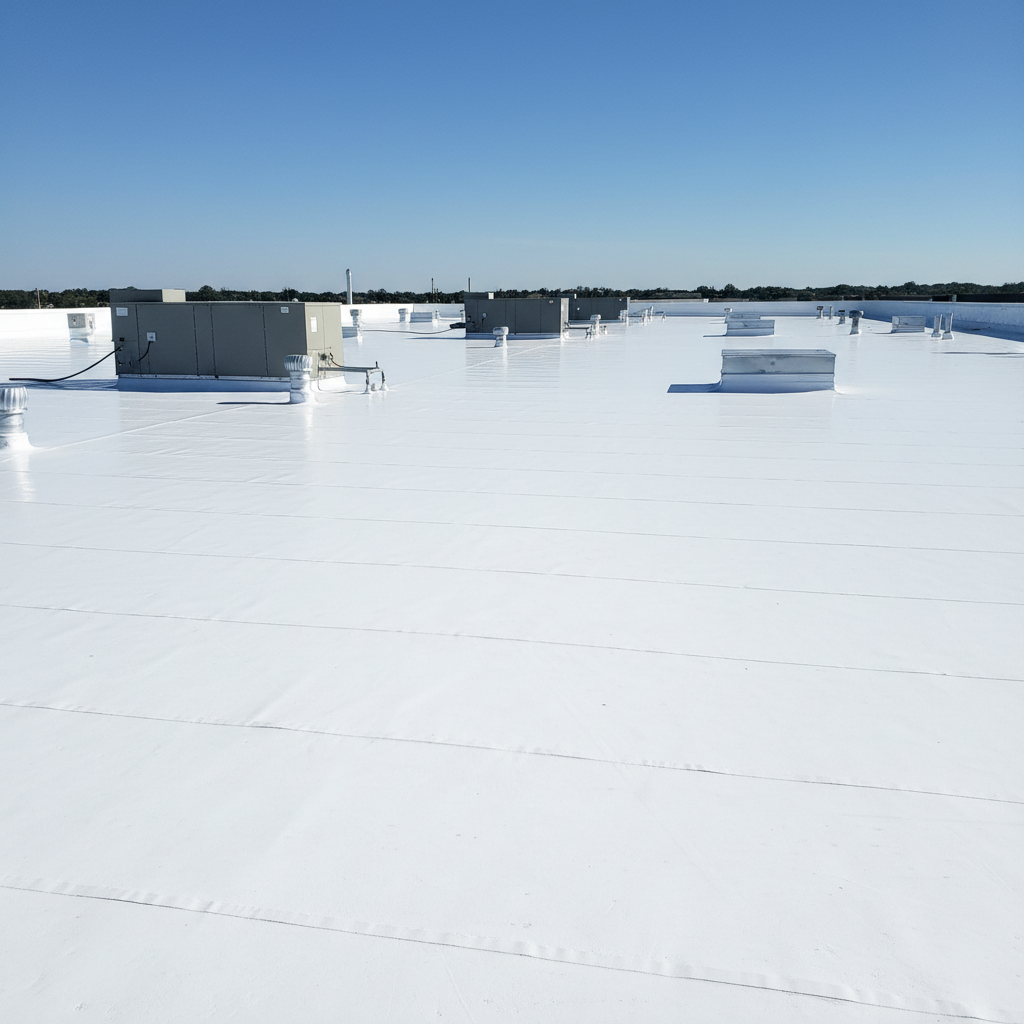
TPO Roofing in Oklahoma City: Costs, Lifespan, and Whether It Fits Your Flat Roof
TPO roofing costs Oklahoma City building owners roughly $6.50 to $11.50 per square foot installed in 2026, and a quality membrane lasts 15 to 30 years. TPO, short for thermoplastic polyolefin, is a single-ply reflective membrane that has become one of the most common choices for flat and low-slope commercial roofs across the metro because it balances price, energy performance, and durability. For an Oklahoma City property owner weighing a flat-roof replacement, TPO is usually one of the first materials on the table.
This guide covers what TPO actually costs here, how long it lasts, how it holds up to Oklahoma hail and heat, and how it compares with the other flat-roof options so you can decide whether it fits your building.
Key Takeaways
- Installed TPO runs about $6.50 to $11.50 per square foot in 2026, with membrane thickness the single biggest cost variable.
- A TPO roof lasts 15 to 30 years depending on thickness, installation quality, and maintenance.
- TPO’s reflective white surface can earn ENERGY STAR recognition and trims cooling costs during long OKC summers.
- Installation quality matters enormously with TPO, so choosing an experienced Oklahoma City commercial roofer is as important as the material itself.
What Is TPO Roofing, and Why Is It Popular in Oklahoma City?
TPO is a single-ply thermoplastic membrane installed over a flat or low-slope commercial roof, with the seams heat-welded together to form a continuous, watertight surface. It blends qualities of two older flat-roof materials, EPDM rubber and PVC, into one flexible and cost-efficient system.
Its popularity across Oklahoma City comes down to three things: a reflective surface that fights the summer heat, a competitive price against other single-ply systems, and heat-welded seams that create fewer weak points than glued or taped alternatives. For a metro building owner replacing a tired flat roof, TPO roofing in Oklahoma City hits a practical middle ground on cost and performance.
TPO is also 100 percent recyclable at the end of its life and contains no chlorine, which appeals to owners with sustainability goals. Those same reflective properties can contribute toward green-building credits on larger commercial projects.
How Much Does TPO Roofing Cost in Oklahoma City?
A complete TPO installation generally costs $6.50 to $11.50 per square foot in 2026, and the full range across the market runs from about $5 to $12 per square foot depending on the roof and the install method. Membrane thickness is the largest single variable in that price.
TPO membranes come in three common thicknesses, and each carries a different material cost and lifespan:
- 45 mil is the entry option, with a typical lifespan of 15 to 20 years.
- 60 mil is the common mid-grade choice, adding puncture resistance and years of service.
- 80 mil is the heaviest, best suited to roofs with foot traffic or harsher exposure.
Labor makes up roughly 40 to 55 percent of the total installed cost, which is why an experienced crew and a clean, correct installation matter so much to the final value. Other factors, including roof size, the number of penetrations, and how much of the old roof must be removed first, also move the number for any specific Oklahoma City building.
How Long Does a TPO Roof Last?
A TPO roof lasts 15 to 30 years, and where a specific roof lands in that range depends mostly on membrane thickness, installation quality, and ongoing maintenance. A 45-mil membrane sits at the lower end, while a thicker 60- or 80-mil membrane on a well-built roof reaches the upper end.
Installation quality is the factor owners underestimate most. TPO is a relatively young technology compared with built-up roofing, and lower-grade membranes and poor seam welds have a documented history of premature failures. A heat weld that is done correctly can outlast the membrane itself, while a rushed or cold weld becomes the first place a roof leaks.
That is the real reason contractor selection carries so much weight with TPO. Two roofs with the same membrane can perform decades apart based on who installed them, which is why owners across the metro, from Midwest City to central Oklahoma City, should vet a commercial roofer’s flat-roof experience before signing.
How Does TPO Handle Oklahoma Hail and Heat?
TPO’s reflective surface is a genuine asset in Oklahoma’s climate. By reflecting sunlight rather than absorbing it, a white TPO membrane keeps the roof and the building cooler, which reduces the cooling load through the long metro summer. The U.S. Environmental Protection Agency documents that reflective cool roofs lower rooftop temperatures and cut building cooling demand in hot climates.
Hail is the harder question. Central Oklahoma sees frequent severe hail, and the state carries some of the highest wind-and-hail insurance exposure in the country, according to the Oklahoma Insurance Department. A thicker TPO membrane resists hail impact better than a thin one, which is one more reason many Oklahoma City owners choose 60 mil or heavier. After any major storm, a prompt inspection catches punctures or seam damage before water gets under the membrane. Honor Roofing and Construction handles storm-related commercial roof repair alongside full installations.
TPO vs. Other Flat-Roof Materials: How Does It Compare?
TPO is one of several single-ply options, and the right pick depends on the building. Against EPDM, the black rubber membrane long used on flat roofs, TPO wins on reflectivity and energy performance, since EPDM absorbs heat. Against PVC, TPO usually costs less, though PVC holds an edge for roofs exposed to grease or chemicals, such as those above a commercial kitchen, where PVC can last far longer.
Against a fluid-applied coating restoration, the decision is about the roof’s current condition. If an existing flat roof is worn but structurally sound, a coating can extend it for less money. If the membrane has failed or the insulation is saturated, a new TPO system is the better long-term investment. A straightforward inspection determines which situation your building is in.
For many metro property owners replacing an aged roof, TPO is the balanced answer on cost, energy savings, and lifespan. You can compare it against the full range of systems on Honor’s commercial roofing options.
What Should Oklahoma City Owners Know About Permits and Installation?
A commercial flat-roof project in Oklahoma City generally requires a permit through the city’s Development Services Department, and commercial plan review takes up to 14 business days when the submittal is complete, per the city’s building and trade permit requirements. Building that timeline into your project schedule avoids surprises, especially if you are trying to close a roof in ahead of storm season.
A qualified contractor handles the permit, the tear-off or recover decision, and the manufacturer’s installation specification so the warranty stays valid. Because TPO depends so heavily on correct seam welding and detailing, the value of a documented, code-compliant commercial roof installation shows up years later in a roof that reaches the top of its lifespan. Owners in nearby communities like Norman should confirm their own city’s permit process too, since requirements vary by municipality across the metro.
Frequently Asked Questions
How much does a TPO roof cost in Oklahoma City?
Installed TPO generally runs $6.50 to $11.50 per square foot in 2026, with the wider market ranging from about $5 to $12. Membrane thickness is the biggest driver, followed by roof size, the number of penetrations, and how much of the old roof needs removal. A per-building estimate comes from a real roof inspection.
How long does TPO roofing last?
A TPO roof lasts 15 to 30 years. A 45-mil membrane typically reaches 15 to 20 years, while thicker 60- or 80-mil membranes on a well-installed roof last longer. Installation quality and regular maintenance are the factors that push a roof toward the upper end of that range.
Is TPO or EPDM better for an Oklahoma City building?
For most Oklahoma City buildings, TPO’s reflective white surface gives it an energy advantage over black EPDM, which absorbs heat during the long metro summers. EPDM still performs well and can cost less upfront, but TPO’s cooling benefit and heat-welded seams make it the more common choice for new flat-roof installations here.
Can a TPO roof survive Oklahoma hail?
A thicker TPO membrane, 60 mil or heavier, resists hail impact better than a thin one, which is why many metro owners size up given how frequent severe hail is here. No membrane is hailproof, so a prompt inspection after any major storm is essential to catch punctures or damaged seams before they leak.
Do I need a permit to replace a commercial roof in Oklahoma City?
Yes, a commercial roof replacement in Oklahoma City generally requires a permit through the Development Services Department, and plan review can take up to 14 business days when the submittal is complete. A qualified commercial roofer handles the permit and ensures the installation meets code and the manufacturer’s specification so your warranty stays valid.
Get a Straight Answer on Your Flat Roof
If you are weighing a TPO roof or a repair for a commercial building anywhere in the Oklahoma City metro, request a free inspection from Honor Roofing and Construction and get honest guidance on the right system and thickness for your property.