

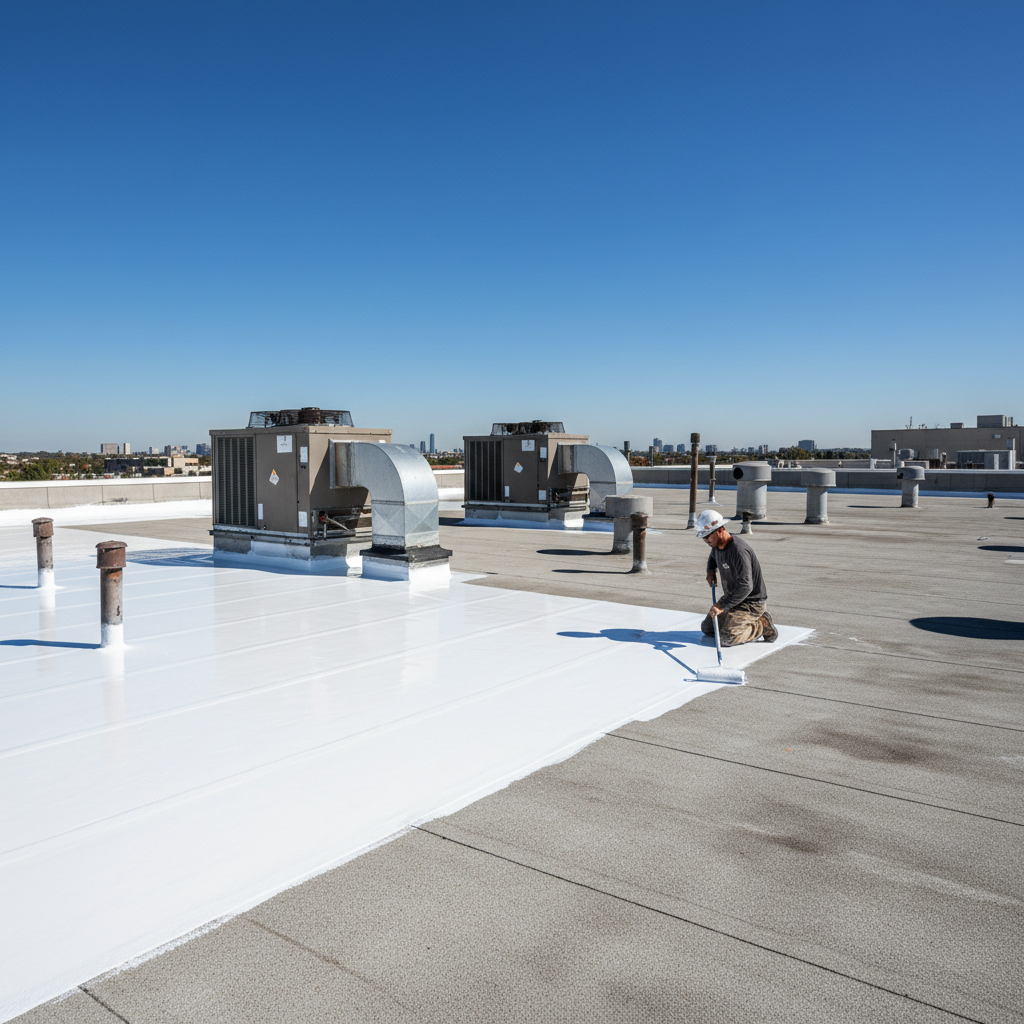
Commercial Roof Coating in Oklahoma City: Silicone, Acrylic, and When Coating Beats a Tear-Off
A commercial roof coating can add 10 to 20 years to an aging flat roof for roughly a third to a half of what a full replacement costs. For an Oklahoma City building owner facing a leaking or sun-beaten low-slope roof, a fluid-applied silicone or acrylic system is often the difference between a five-figure maintenance project and a six-figure tear-off. A commercial roof coating in Oklahoma City works by sealing an existing membrane against water and reflecting the sun’s heat, which restores the roof rather than removing it.
This guide walks through how coatings actually perform, how silicone and acrylic stack up on cost and durability, what a coating project looks like from inspection to cure, and the point at which replacement becomes the smarter investment for a metro property.
Key Takeaways
- A coating restoration for a 10,000-square-foot flat roof typically runs $20,000 to $50,000, while a full replacement runs $50,000 to $120,000.
- Silicone excels where water ponds and holds its reflectivity for years; acrylic costs less and recoats easily but struggles with standing water.
- Oklahoma City allows only one roofing layer on a reroof, so a coating that restores the existing membrane sidesteps a costly tear-off.
- A reflective coating lowers rooftop temperatures and cooling bills, a real advantage during long OKC summers.
What Is a Commercial Roof Coating, and How Does It Work?
A commercial roof coating is a fluid-applied membrane rolled or sprayed over an existing flat or low-slope roof to seal it and extend its service life. Once cured, the coating forms a seamless, waterproof skin across the entire surface, including around seams, penetrations, and flashings where most leaks begin.
Coatings are a restoration product for a roof that is worn but structurally sound. If the substrate underneath is dry and the decking is solid, a coating can reset the clock on a roof that would otherwise be scheduled for removal. That is why commercial roof maintenance in OKC increasingly leans on coatings as a planned midlife step for TPO, EPDM, metal, and modified-bitumen roofs.
The two chemistries most commercial property owners choose between are silicone and acrylic. Both reflect sunlight and both seal the roof, but they behave very differently under Oklahoma weather, and the right pick depends on your roof’s slope, drainage, and how much ponding water it holds after a storm.
Silicone vs. Acrylic Roof Coating: Which Performs Better in Oklahoma?
Silicone is the premium choice for flat roofs that hold ponding water, because it stays waterproof under continuous moisture better than any other coating chemistry. A silicone roof coating in Oklahoma keeps its flexibility and UV resistance over the years without turning brittle, resists biological growth, and holds its reflective surface longer. Installed, silicone coatings generally run about $2.50 to $5.00 per square foot, and closer to $3.50 to $7.00 on a full low-slope restoration.
Acrylic coatings cost less, typically $1.50 to $3.00 per square foot installed, and they are easy to work with. Acrylic recoats readily, comes in many colors, dries quickly, and is available in low-VOC formulas. The tradeoff: as a water-based material, an acrylic roof coating for commercial buildings does not hold up well to standing water, so it fits steeper low-slope roofs and metal roofs where water drains fully.
For much of the Oklahoma City metro, where flat commercial roofs and afternoon downpours are common, silicone earns its higher price on roofs that pond, while acrylic is a sound, budget-friendly option on roofs that drain cleanly. A thorough roof inspection settles which one fits your building.
How Much Does a Commercial Roof Coating Cost in Oklahoma City?
The clearest reason building owners choose coatings is cost. A coating system for a 10,000-square-foot commercial flat roof typically lands between $20,000 and $50,000, compared with $50,000 to $120,000 for a full replacement of the same roof. That gap is why a coating is a genuine capital-preservation move for a metro property owner watching a maintenance budget.
Several factors move the number for a specific building:
- Roof size and how many penetrations, curbs, and skylights the crew must detail by hand.
- The coating chemistry chosen, since silicone carries a higher material cost than acrylic.
- The condition of the existing membrane and how much prep, cleaning, or seam repair it needs first.
- Whether the roof holds ponding water, which drives the silicone decision and may require extra mil thickness.
Coatings also carry a maintenance advantage: most silicone and acrylic systems can be recoated at the end of their term, which extends the roof again without a tear-off. That renewable cycle is a big part of why commercial roof coating has become a core part of long-term commercial roof maintenance in OKC.
Does an Oklahoma City Building Permit Affect a Coating Project?
Oklahoma City permits only one roofing layer on a reroof, and work must comply with code and manufacturer standards, per the city’s Development Services re-roofing requirements. That rule matters for coatings in a helpful way: because a coating restores the existing membrane instead of adding a new roof system on top, it does not trigger the tear-off that a second layer would force down the road.
For building owners, that keeps the roof compliant and avoids the disposal cost and disruption of a full removal. A qualified contractor confirms whether your specific project needs a permit and handles the paperwork through the city’s Development Center, so the work is documented correctly. This is also where local experience pays off, since a crew that works across the Oklahoma City metro already knows how the city reviews these projects.
What Does the Coating Process Look Like?
A professional commercial coating project follows a consistent sequence, and understanding it helps a building owner know what to expect on their property.
First comes a full roof inspection to confirm the membrane is a good candidate and to find any wet insulation or failed seams. Next, the crew power-washes the entire surface so the coating bonds properly. Any splits, seams, and penetrations are repaired and reinforced, often with a polyester fabric embedded in coating at the detail points. Then the base coat and topcoat are applied at the manufacturer-specified thickness, and the roof is left to cure.
Done correctly, the result is a seamless, reflective, watertight roof that carries a real manufacturer warranty. Whether the building sits in Edmond or the heart of Oklahoma City, the same fundamentals apply: proper prep and correct mil thickness are what separate a coating that lasts two decades from one that fails early. Honor Roofing and Construction handles both silicone and acrylic commercial roofing coatings as part of a maintenance plan for metro building owners.
When Is Coating the Right Call, and When Should You Replace?
A coating is the right move when the roof is aging but sound: the deck is dry, the leaks are limited to seams and flashings, and the membrane still has structural integrity. In that case, a coating buys years at a fraction of replacement cost and improves energy performance at the same time.
Replacement becomes the better investment when the roof has widespread saturation, wet insulation across large areas, or storm damage severe enough that the substrate itself has failed. Oklahoma weather forces this decision often, since severe hail is common across the metro and the state carries some of the highest wind-and-hail insurance exposure in the country, according to the Oklahoma Insurance Department. After a major hailstorm, an honest inspection determines whether the roof can be coated or whether a commercial roof repair or replacement is the responsible path. A reputable Oklahoma City contractor will tell you plainly which situation you are in.
Do Reflective Coatings Really Lower Energy Bills?
Yes. A reflective, light-colored roof coating lowers the roof’s surface temperature by reflecting sunlight instead of absorbing it, which reduces the cooling load a building’s HVAC system carries. The U.S. Environmental Protection Agency documents that cool roofs cut roof temperatures and can reduce building cooling demand meaningfully in hot climates.
Across the long, hot Oklahoma City summer, that reflectivity translates into real savings on cooling costs and less thermal stress on the roof membrane, which helps it last longer. Building owners in suburbs like Moore see the same benefit, since the metro shares one punishing summer heat load. Silicone in particular holds its reflectivity for years, so the energy benefit does not fade quickly. For a commercial owner, a reflective coating is one of the few roofing decisions that both protects the building and trims a recurring operating expense.
Frequently Asked Questions
How long does a commercial roof coating last in Oklahoma?
A properly installed silicone or acrylic coating generally lasts 10 to 20 years, depending on the chemistry, the mil thickness applied, and how well the roof drains. Silicone tends to hold up longest on roofs with ponding water. Most systems can also be recoated at the end of that term to extend the roof again without a tear-off.
Can any flat roof be coated, or only some?
Most flat and low-slope commercial roofs can be coated if the underlying deck is dry and the membrane is structurally sound. Coatings work over TPO, EPDM, metal, and modified bitumen. A roof with widespread wet insulation or a failed substrate is usually not a coating candidate and needs replacement instead.
Is silicone or acrylic better for an Oklahoma City building?
It depends on drainage. Silicone is the stronger choice for flat roofs that hold ponding water after Oklahoma City’s heavy rains, since it stays waterproof under standing moisture. Acrylic is a cost-effective option for roofs that drain fully, including many metal and steeper low-slope roofs. An inspection confirms which fits your roof.
Will a roof coating stop an existing leak?
A coating seals seams, flashings, and small membrane splits where most commercial leaks start, so it resolves many active leaks once the surface is repaired and coated. Leaks caused by saturated insulation or structural deck damage need those areas addressed or replaced first, because a coating cannot restore a roof that has already failed underneath.
Does a coated roof qualify for a warranty?
Yes. When a manufacturer-approved system is installed at the specified thickness by a qualified contractor, most silicone and acrylic coatings carry a manufacturer warranty, often 10 to 20 years. Proper surface prep and documented application are what keep that warranty valid, which is why professional installation matters.
Protect Your Oklahoma City Commercial Roof
If your flat roof is aging, leaking, or baking through another OKC summer, a coating may add years of life for far less than a replacement. Request a free inspection from Honor Roofing and Construction and get a straight answer on whether coating or replacement is right for your building.